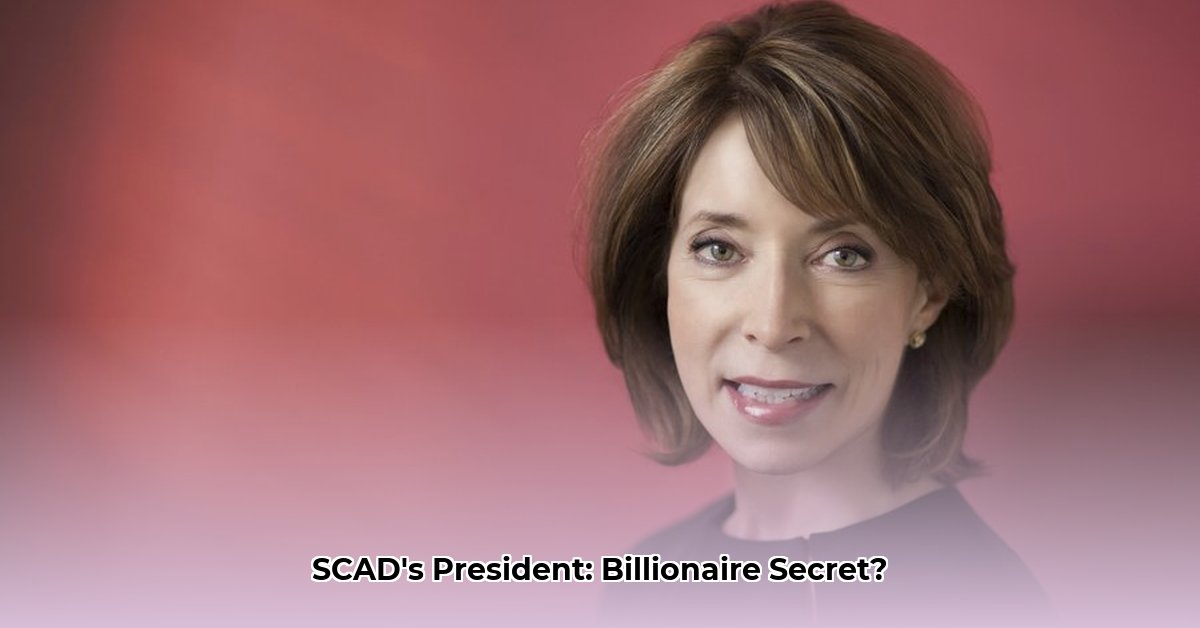
The Rise of SCAD and the Billionaire President
Paula Wallace's leadership has undeniably shaped Savannah College of Art and Design (SCAD) into a global powerhouse. Her tenure has seen SCAD's net worth soar past $1 billion (circa 2020), a figure reflecting exceptional financial success and a highly effective business model. However, this remarkable growth has been accompanied by controversies surrounding Wallace's compensation and certain financial practices, prompting critical examination of her legacy and the institution's operating model. This in-depth analysis explores the multifaceted narrative behind SCAD's success and the complexities surrounding Paula Wallace's net worth.
SCAD's Financial Success: A Closer Look
SCAD's financial performance is striking. Annual revenues consistently exceed $500 million, with profits often exceeding $150 million. This remarkable profitability, alongside the institution's billion-dollar valuation, points to shrewd financial management and a highly successful business model. Over 12,000 students from over 100 countries attend SCAD's campuses globally, further solidifying its financial strength and international reach. The expansion into robust online programs has only amplified this success. Yet, this financial success narrative has not been without its challenges.
How has SCAD achieved such astounding financial growth? Several factors contribute: strategic international expansion, a robust online learning platform, and highly sought-after programs in creative fields all play a significant role. But what about the less visible aspects of SCAD's financial story? How does the institution's reliance on tuition revenue compare to that of its peers? Are there any areas of financial vulnerability? A deeper dive into these aspects is essential for a more comprehensive understanding.
The Compensation Question: Balancing Success with Transparency
Paula Wallace's compensation has been a focal point of public discourse. While exact figures remain somewhat elusive, publicly available data indicates packages exceeding $9 million in 2014 and over $5 million in 2020. These figures, alongside concerns about faculty compensation—particularly for adjunct faculty—have ignited significant debate concerning fair compensation practices within the higher education sector and the ethical considerations of executive pay within a non-profit institution. The contrast between high executive compensation and what some perceive as comparatively lower compensation for teaching staff remains a point of contention.
"The disparity in compensation between top administrators and adjunct faculty raises serious questions about equitable resource allocation within higher education," stated Dr. Anya Sharma, Professor of Economics at the University of Georgia. "Transparency regarding compensation structures is essential for fostering trust and accountability."
Transparency and Accountability: Challenges for SCAD's Future
Addressing concerns regarding financial transparency and practices is crucial for SCAD's continued success. Allegations surrounding a PILOT (Payment In Lieu Of Taxes) program, though not fully clarified, underscore the need for increased openness and accountability in all aspects of the institution's financial operations. Maintaining trust necessitates open communication and a willingness to engage constructively with any legitimate concerns. This is not simply about defending SCAD's practices, but about actively demonstrating a commitment to best practices and ethical standards. The long-term impact of these controversies will shape not only public perception but also SCAD's reputation and financial stability.
Key Takeaways:
- SCAD's financial success under Paula Wallace's leadership is remarkable, with a net worth exceeding $1 billion.
- Wallace’s high compensation packages have sparked considerable debate regarding fair compensation practices in higher education.
- Addressing concerns around financial transparency and accountability is essential for maintaining public trust and long-term success.
Moving Forward: Ensuring a Sustainable Future
SCAD's future hinges on navigating the complexities of its past. Sustaining its financial success requires diversification of revenue streams, a proactive commitment to transparency, and a decisive approach to addressing the controversies surrounding its financial practices. This includes a transparent and equitable compensation structure that aligns with the institution's values and the public's expectations. Building and maintaining trust among students, faculty, alumni, and the broader community demands open communication and a demonstrable commitment to ethical standards.
The ultimate legacy of Paula Wallace and the trajectory of SCAD will be shaped by how effectively these challenges are addressed. The ongoing dialogue surrounding SCAD's financial practices is a reminder that even extraordinary success necessitates a steadfast commitment to ethical leadership and transparency. The complete picture of Paula Wallace's net worth is thus deeply intertwined with the ongoing narrative of SCAD's financial journey.